
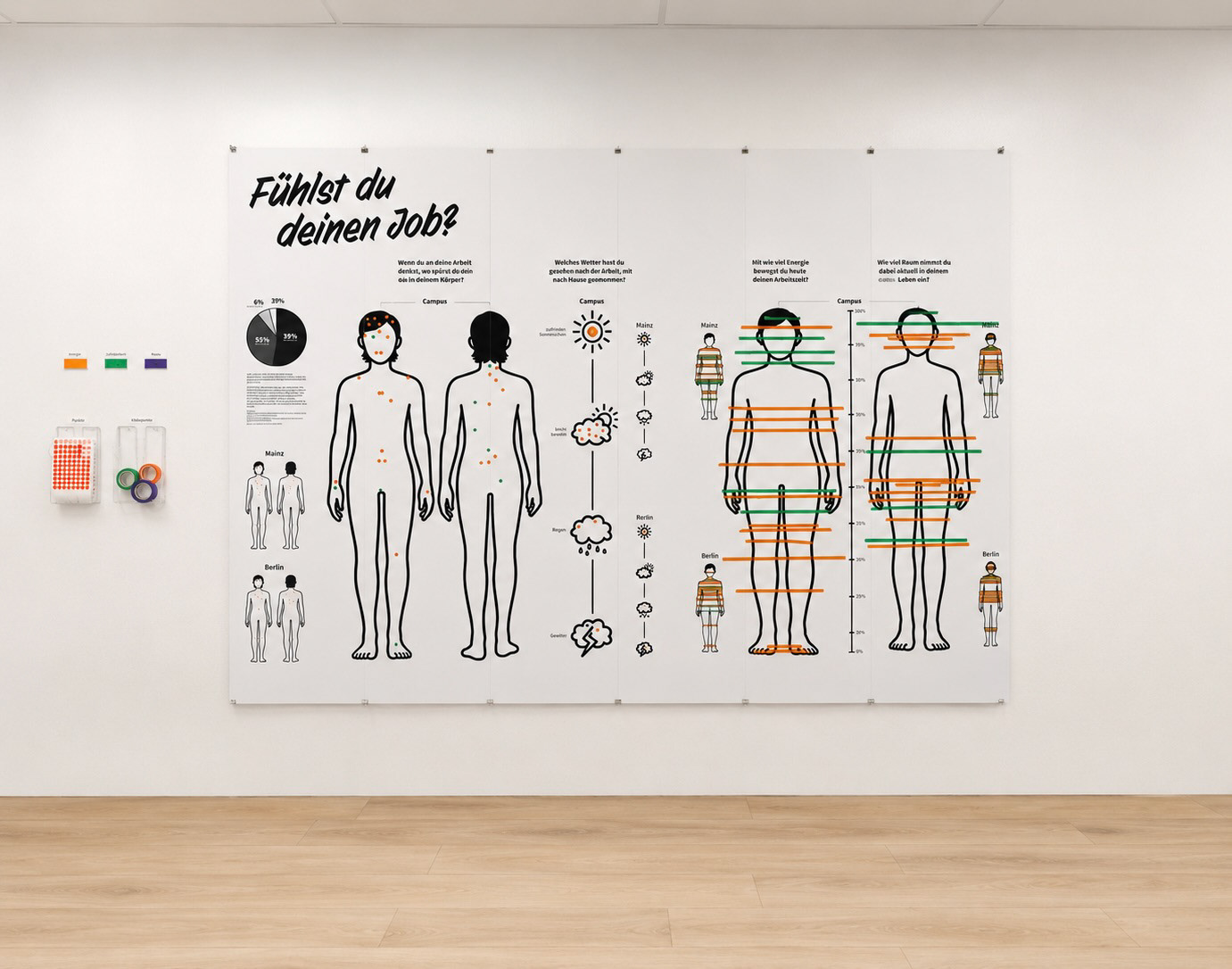
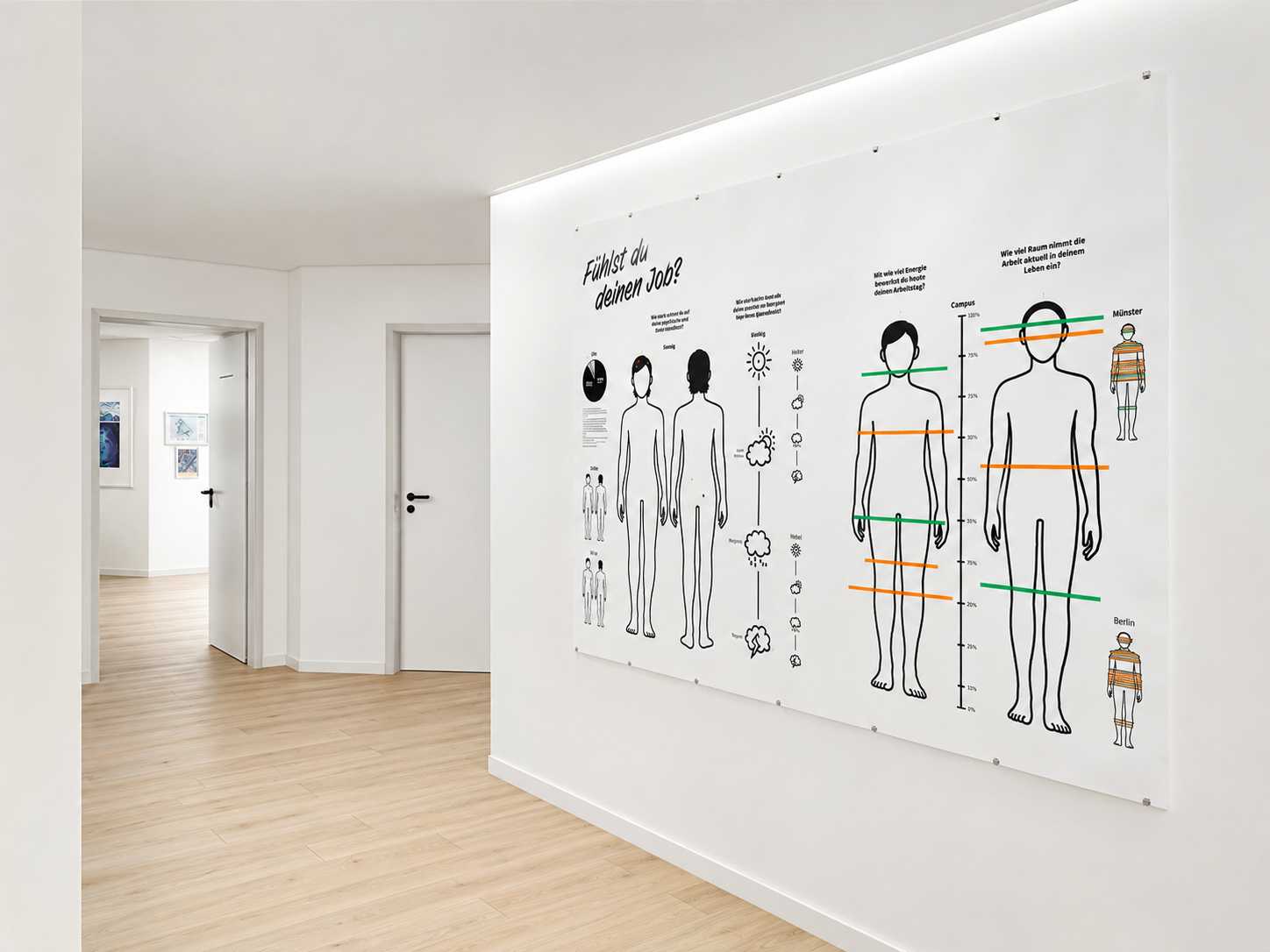
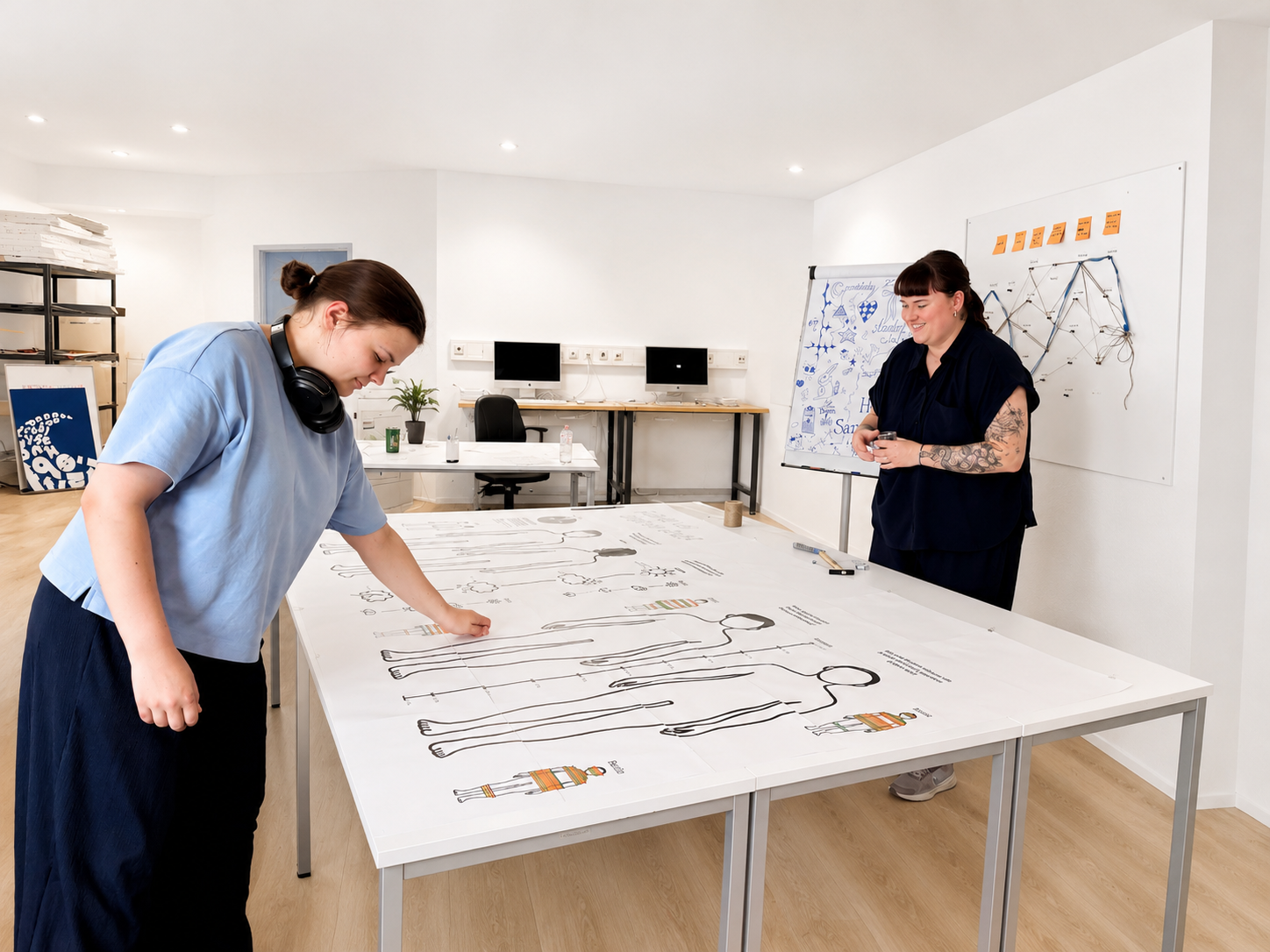
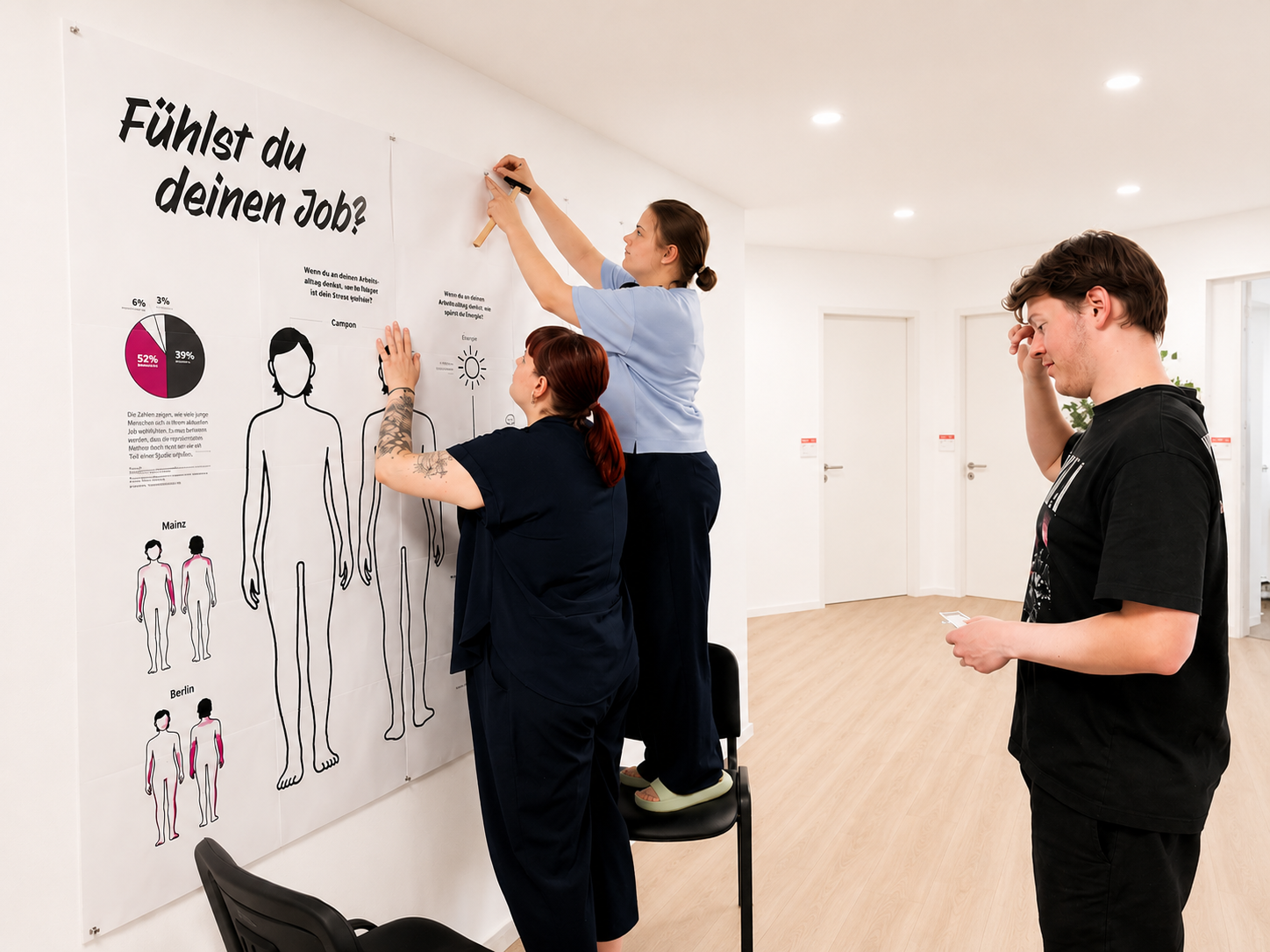
Fühlst du deinen Job? – Do you feel your job?
"All things considered, how satisfied are you with your main occupation?" — that is how the German Federal Statistical Office measures job satisfaction. What the figure cannot show is how much room work occupies in a life: how it reaches into private time, and how many people are still mentally at their desk long after they have come home. Surveys in Mainz and Berlin traced how work actually feels — how far it takes hold, physically and in the mind.
Data: Statistisches Bundesamt, survey on job satisfaction · own surveys, Mainz and Berlin, 2026
Students: Hannah, Sarah Obermaier (Mainz), Eveline Rutkowski, Kiliano Ribeiro (Berlin)
Numbers describe the world, but they rarely tell the whole story. Official statistics capture what can be counted; what people feel, perceive and experience often stays invisible. Beyond Numbers set out to make that invisible layer visible. Across nine German cities, students of the BA Mediendesign programme explored the gap between official data and lived reality, guided by a single question: what really counts?
Working in teams, the students designed their own surveys and took them into the streets of their cities. They asked residents how they perceive and use their urban environment, then set these findings against the official statistics on the same questions. Where the two diverge, a more complex reality comes into view — and this is where the project locates the work of design: not in decorating data, but in giving form to what statistics leave out. Each visualization is paired with a participatory element that invites visitors to cast their own vote and become part of the survey.
Beyond Numbers was shown in the WDC-Campus exhibition young talents at work at the Museum Angewandte Kunst Frankfurt (3 July – 9 August 2026), part of World Design Capital Frankfurt RheinMain 2026 and its theme Design for Democracy. Further works from the project can be seen at the IU campuses in Mainz and Berlin, where visitors can also take part.
Beyond Numbers understands data visualization as a democratic practice. Deciding what to count, and how to show it, is never neutral: those who appear in the numbers become visible, while those who do not risk falling out of the conversation. By setting official statistics against lived experience — and by inviting visitors to add their own voice — the project makes the case for a fuller, more inclusive picture of the cities we share.
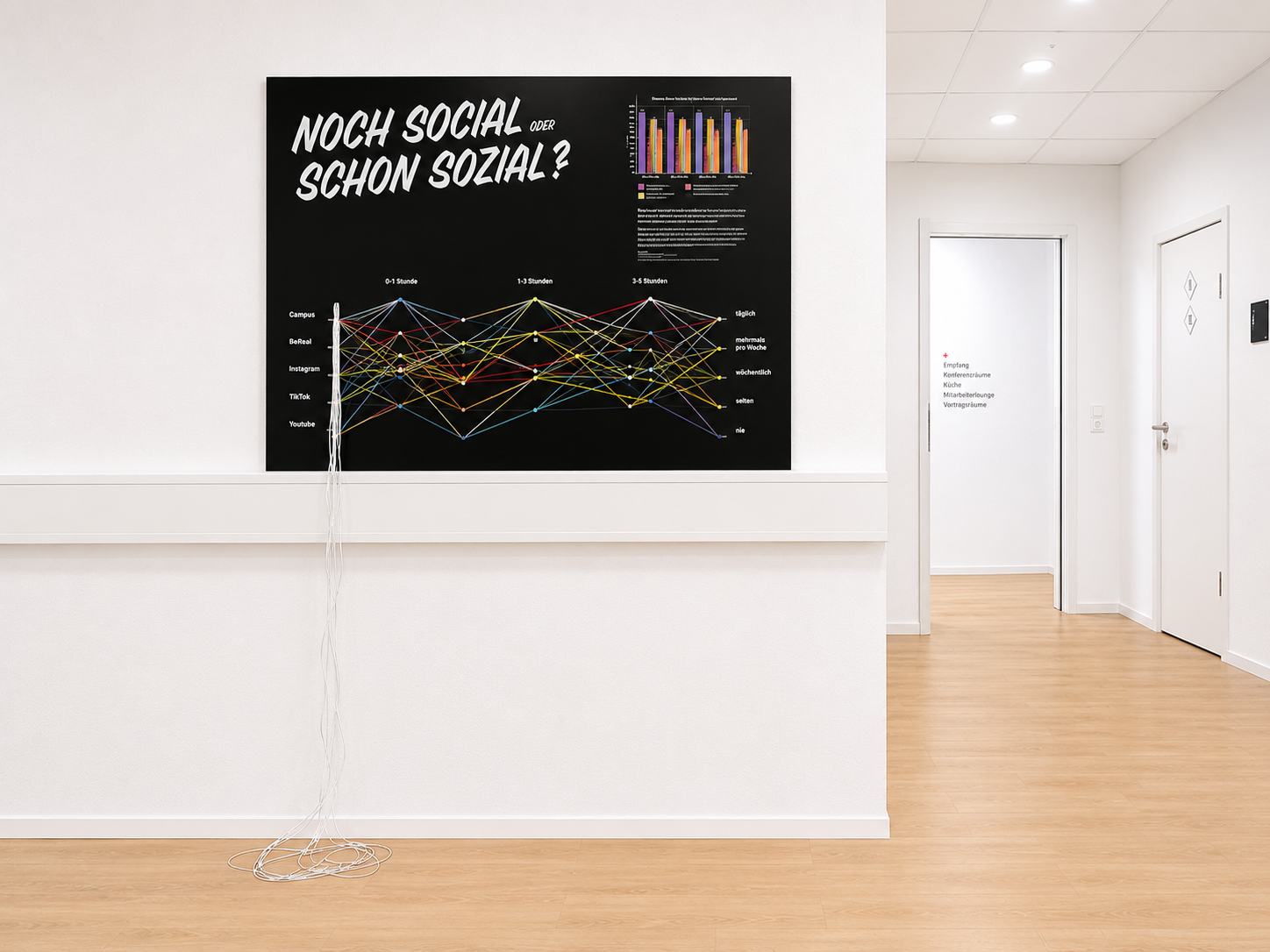
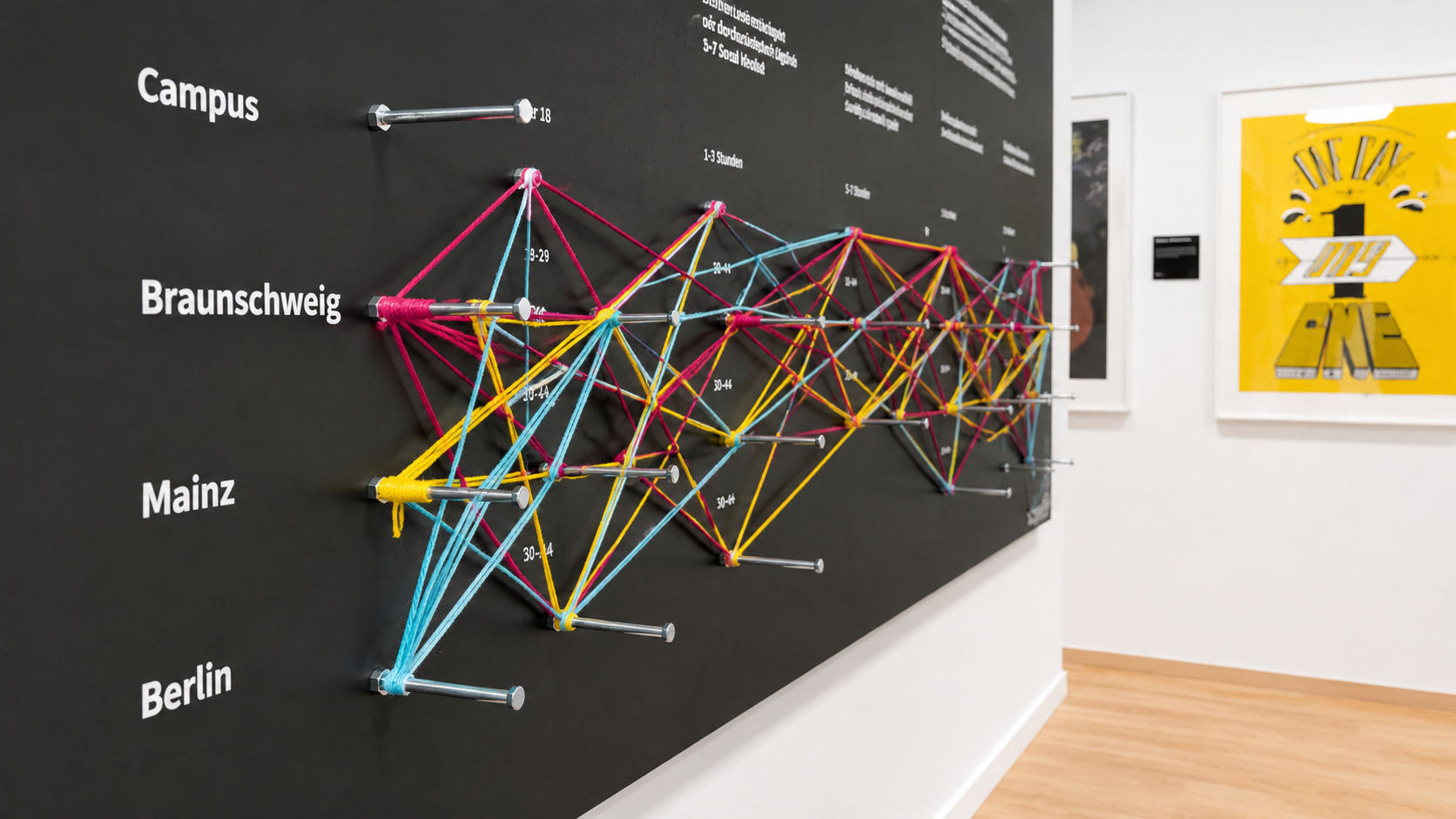
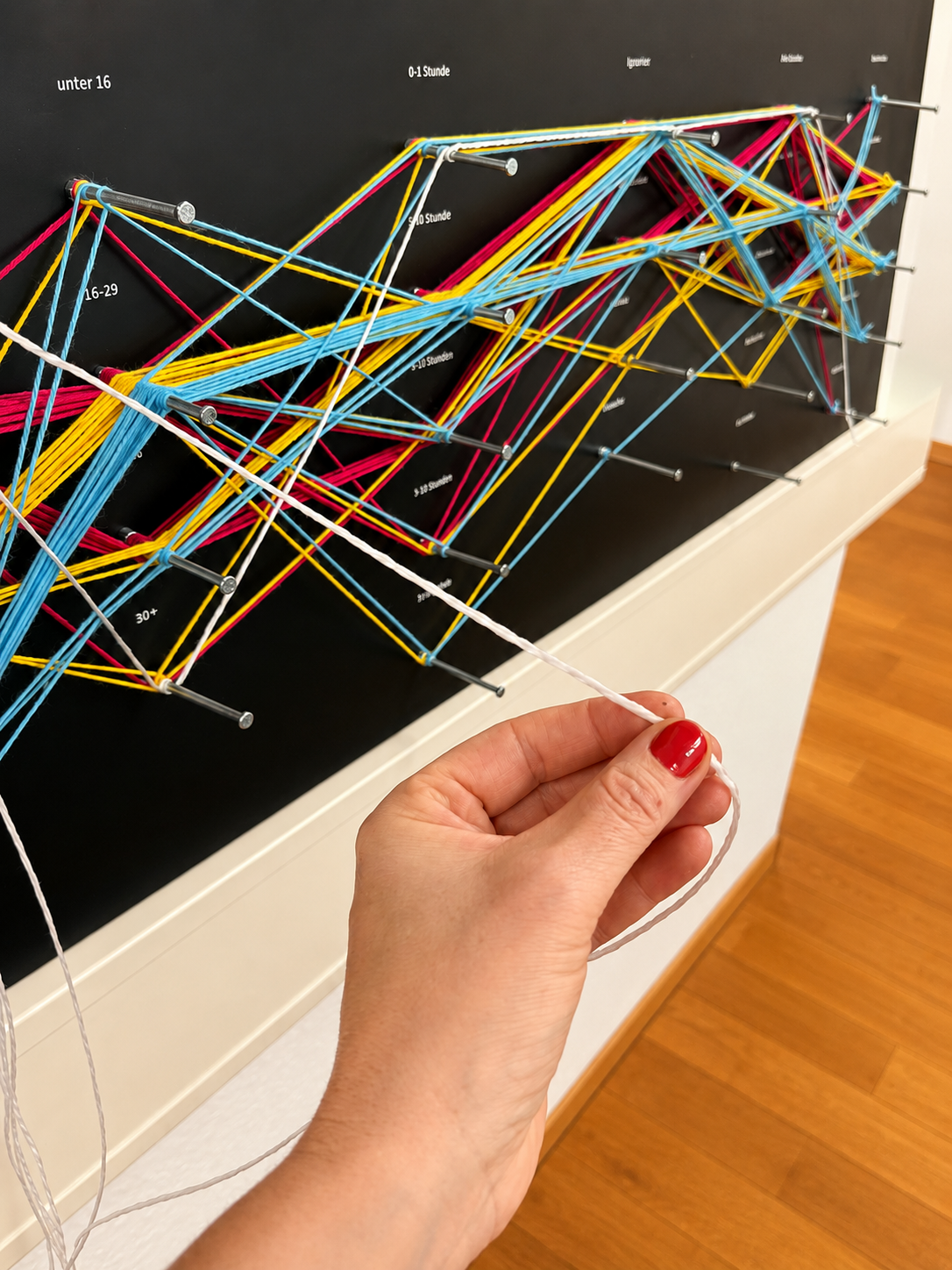
Noch social oder schon sozial? – Still "social", or actually social?
International data links daily social media use to the life satisfaction of young people. At first glance the correlation seems clear — but the figures leave the essential question open. Do digital contacts really create closeness? Can constant availability coexist with isolation? The team surveyed people in Mainz, Berlin, Braunschweig and Frankfurt, asking not only how much time they spend online but how connected they feel while doing so. What emerges is the gap between usage and belonging.
Data: [official source] · own surveys in Mainz, Berlin, Braunschweig and Frankfurt, 2026
Students: Hadjer Hasan Abead, Pascal Haibach, Eva-Maria Klein, Sara Reese, Elias Ritter
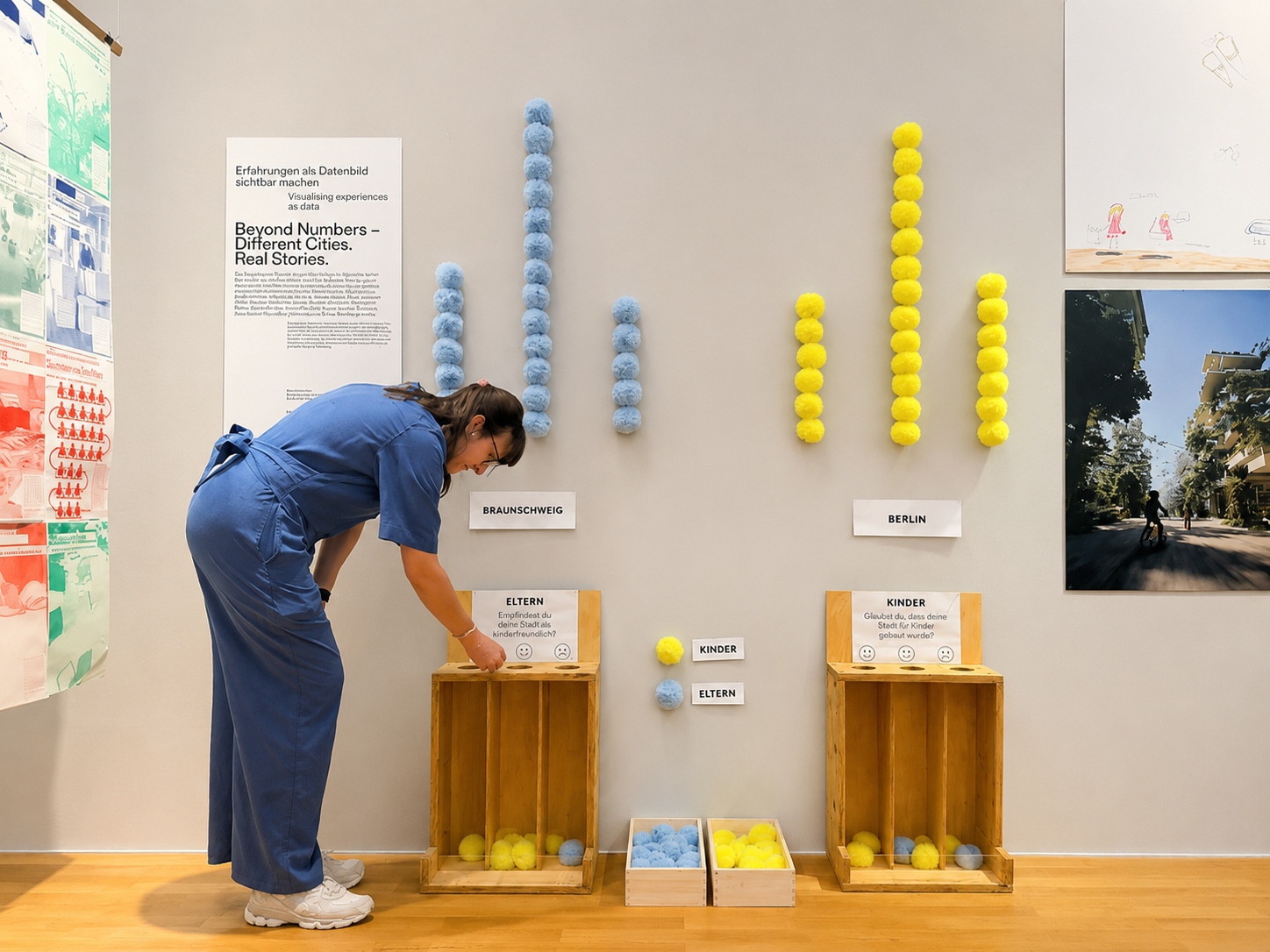
Haben Kinder Platz in unserer Stadt? – Do children have space in our city?
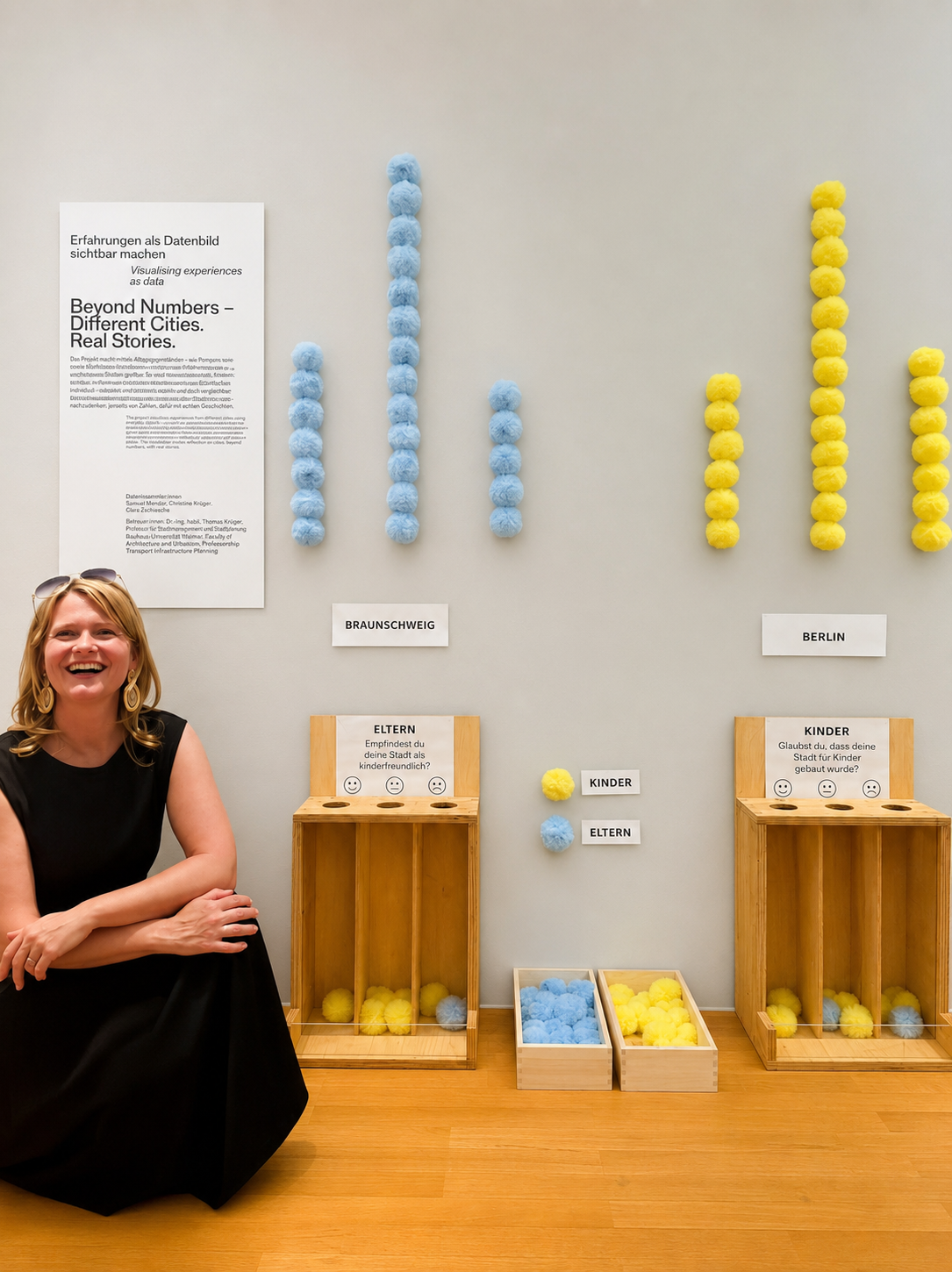
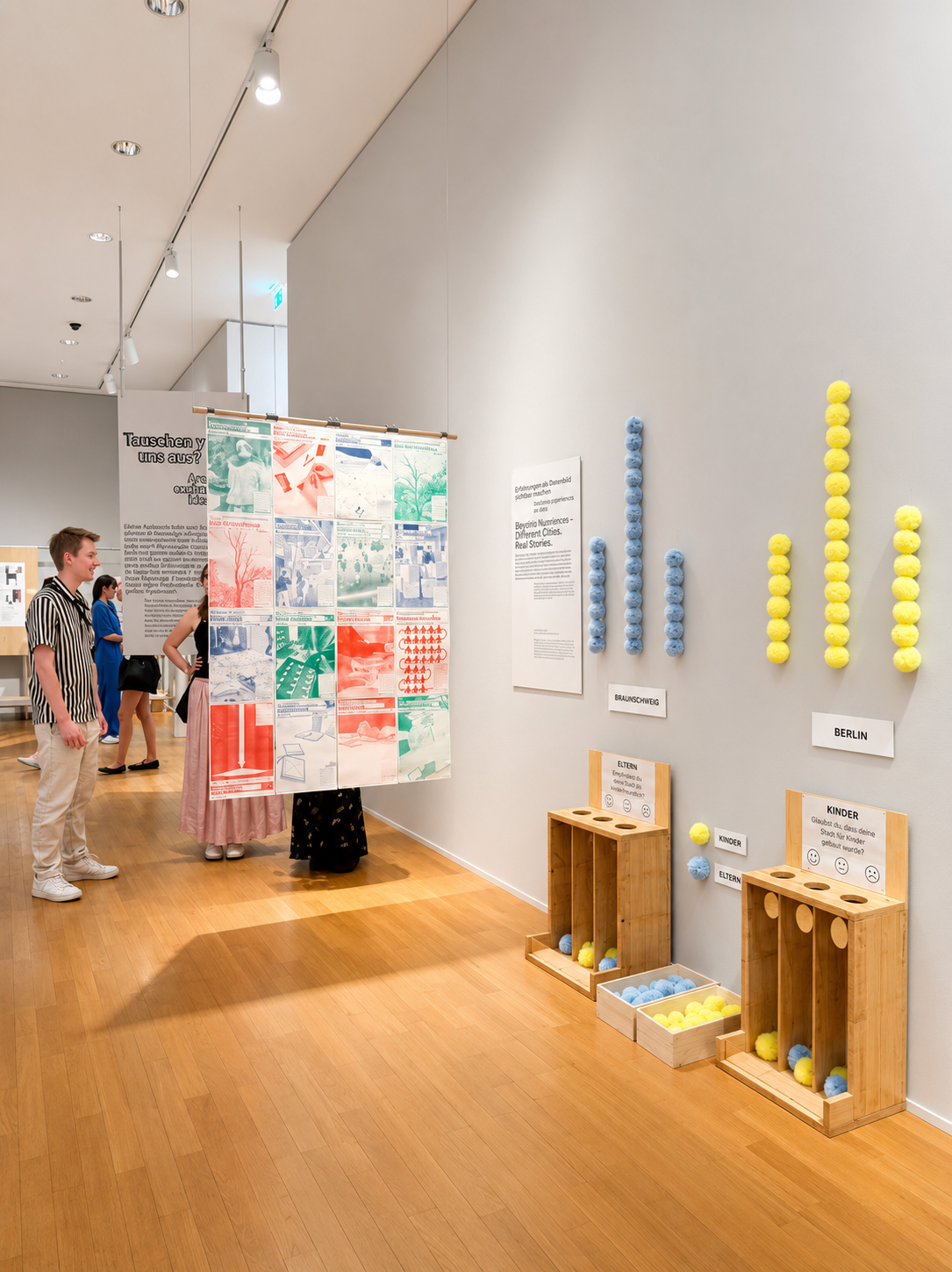
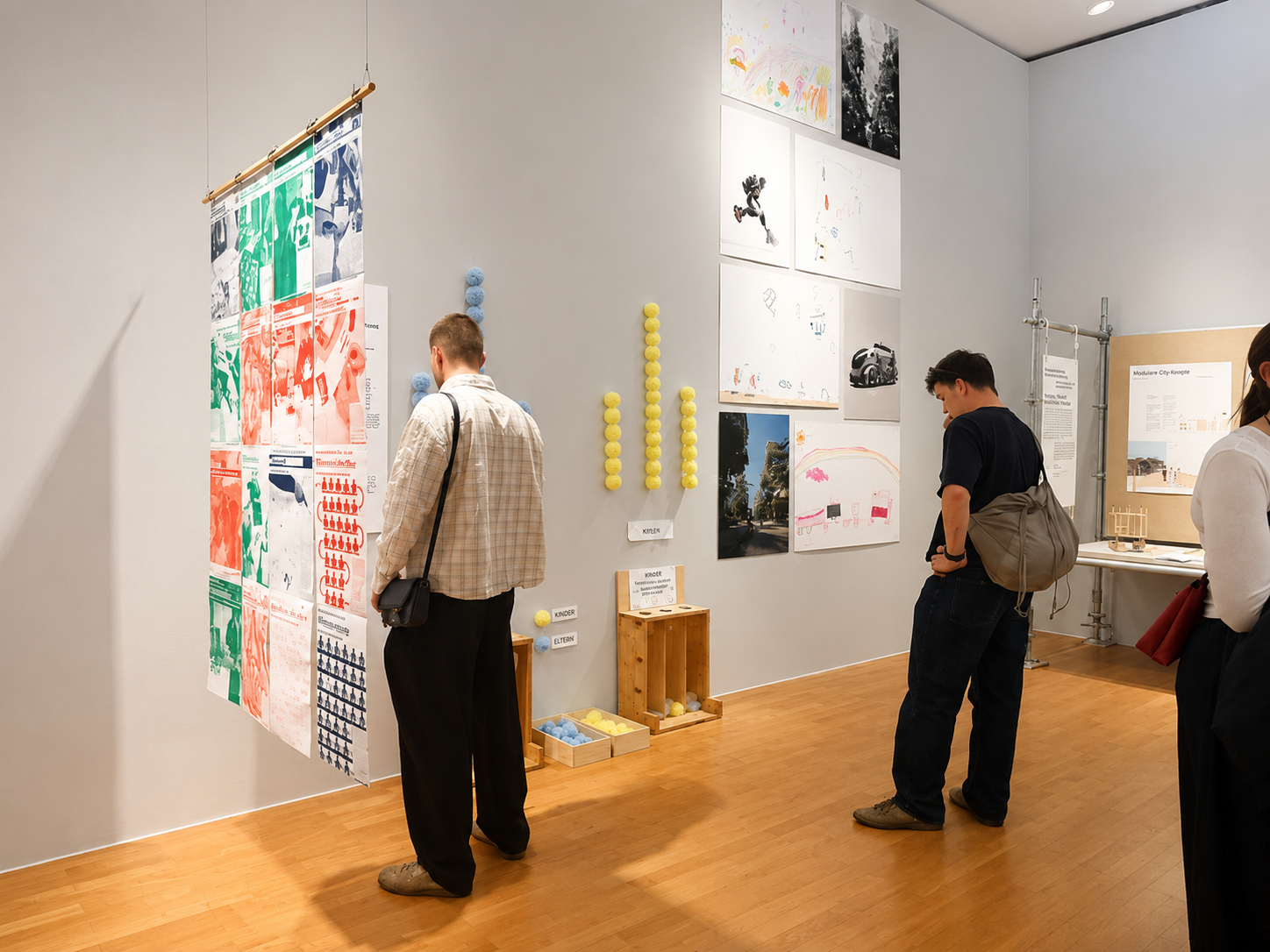
Many German cities describe themselves as family-friendly, and a nationwide study of over 31,000 people across all 400 districts maps how child-friendly residents perceive their region to be. But such figures say little about which places children actually use, what they miss in the urban fabric, and what a city would look like if they designed it. The team asked children and parents in Berlin and Braunschweig — and found a clear distance between official planning and lived experience.
Data: Riederer/Rühle, ifo study on child-friendliness in Germany (2025) · own surveys with parents and children, Berlin and Braunschweig, 2026
Students: Mia Betolaza, Charlotte Ermerling (Berlin) · Ennie Schiewe, Jil Möde (Braunschweig)
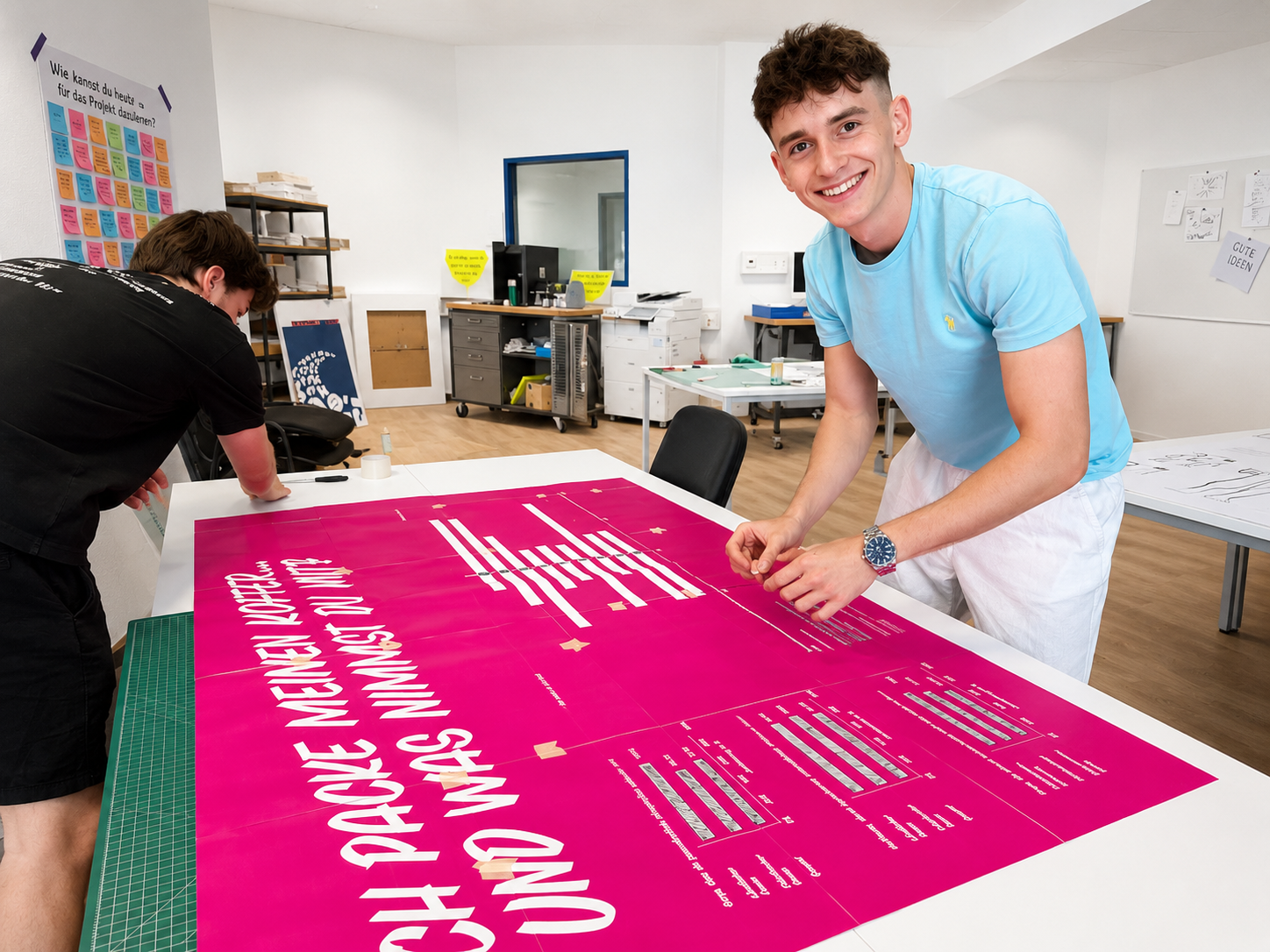
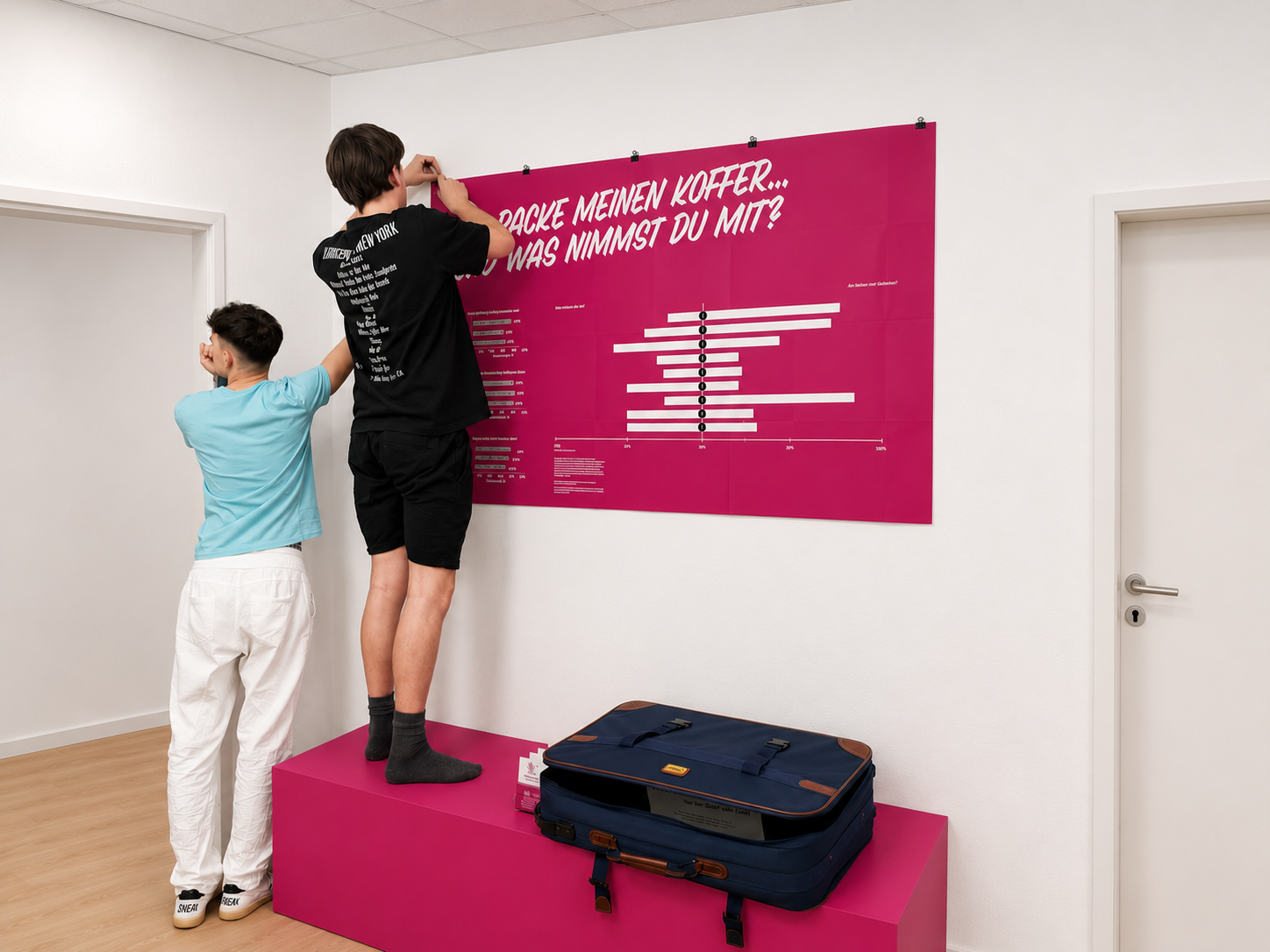
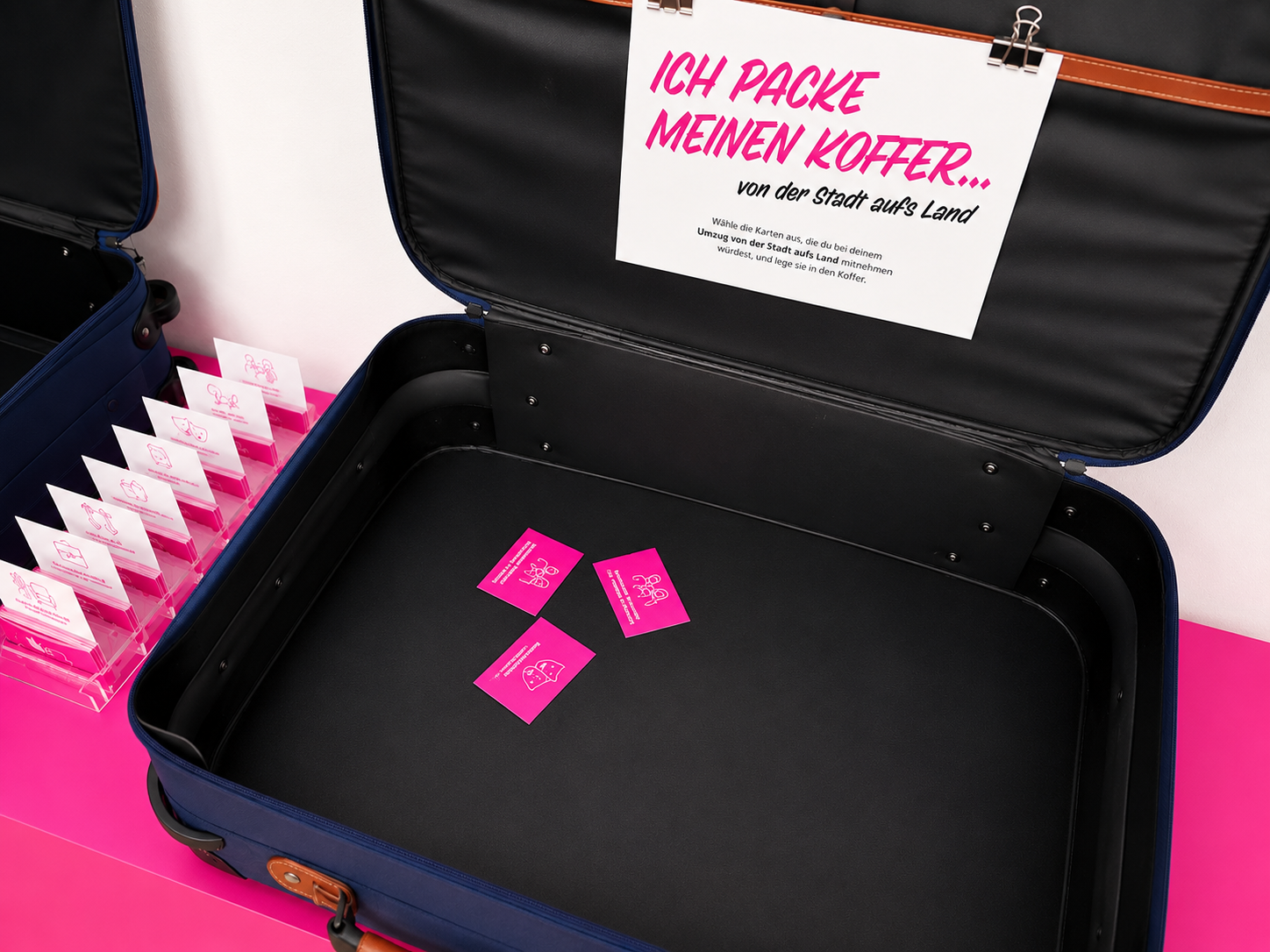
Ich packe meinen Koffer. Und was nimmst du mit? – I'm packing my bag. What would you take?
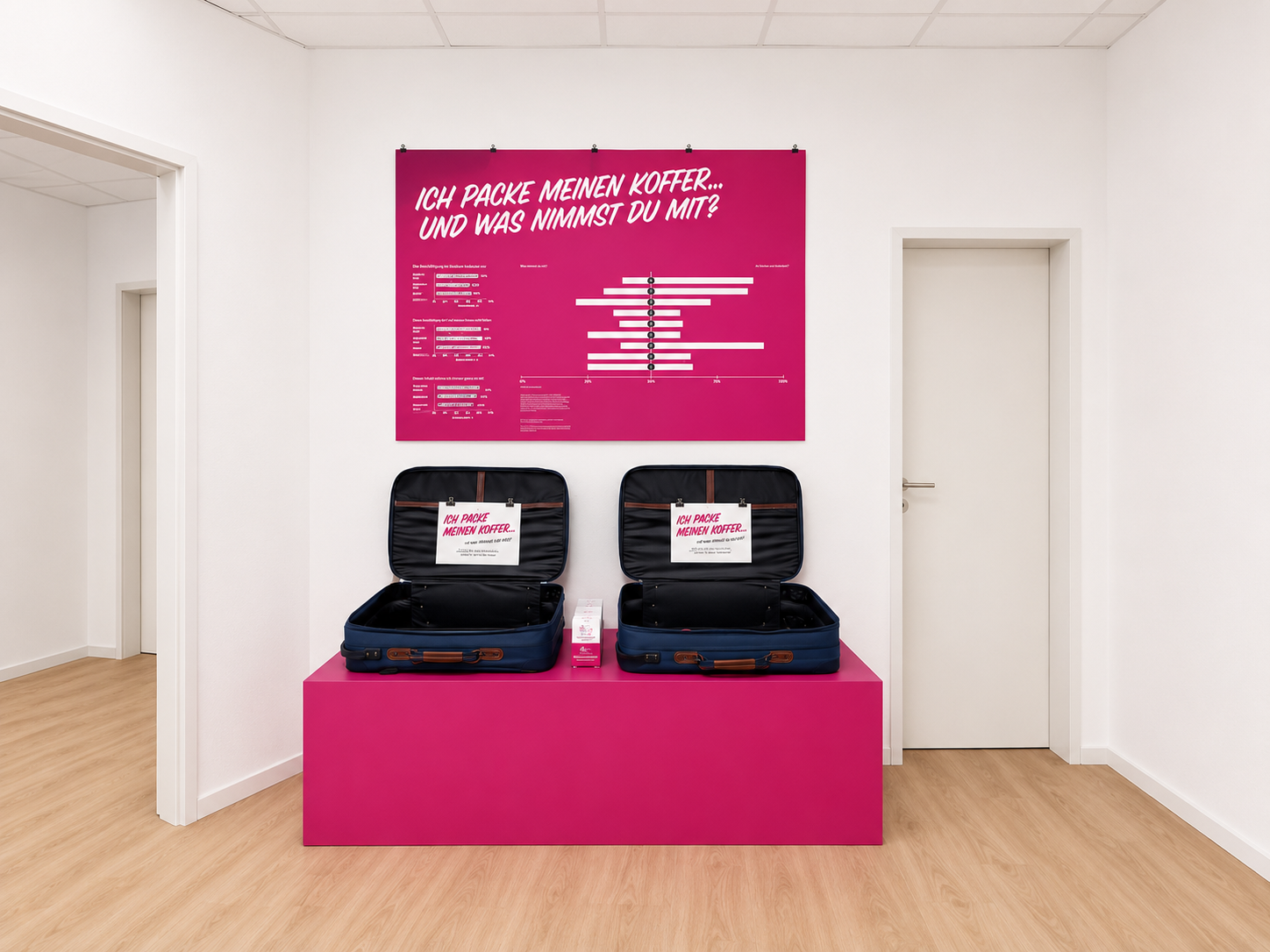
What do people need from the place they live — and how far apart are those needs in the city and in the countryside? Borrowing the logic of a children's memory game, this work collects what individuals would take with them and sets these answers side by side. The result is less a ranking than a dialogue: a set of perspectives that becomes a starting point for designing regions that are liveable, sustainable and actually built around what people need.
Data: [official source] · own survey, [cities], 2026
Students: Jonas Grabenhorst, Jona Heithecker (Braunschweig) Thomas Raaß, Fabian Mattia Weber (Mainz), Matti Vanwell (Düsseldorf)
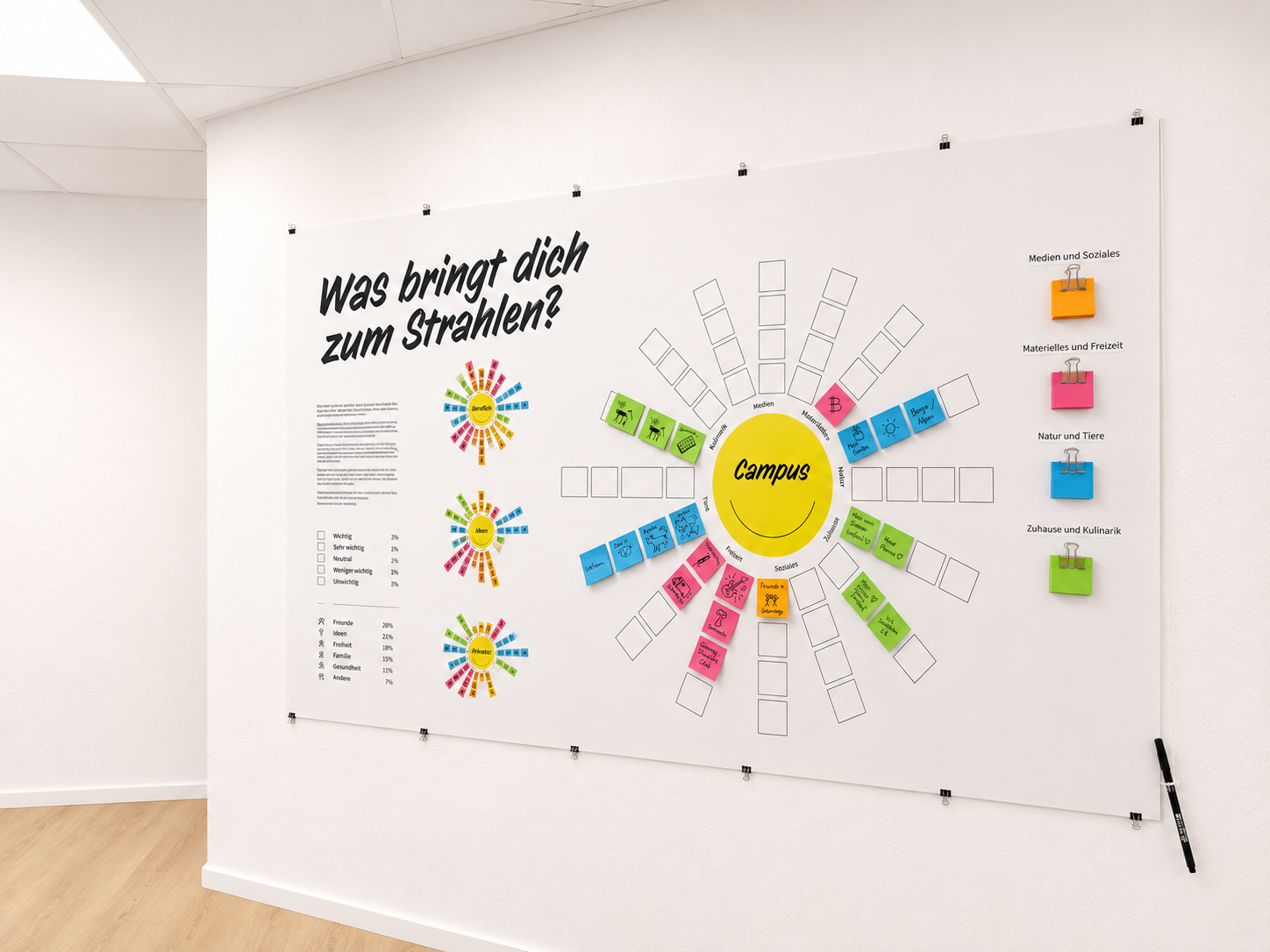
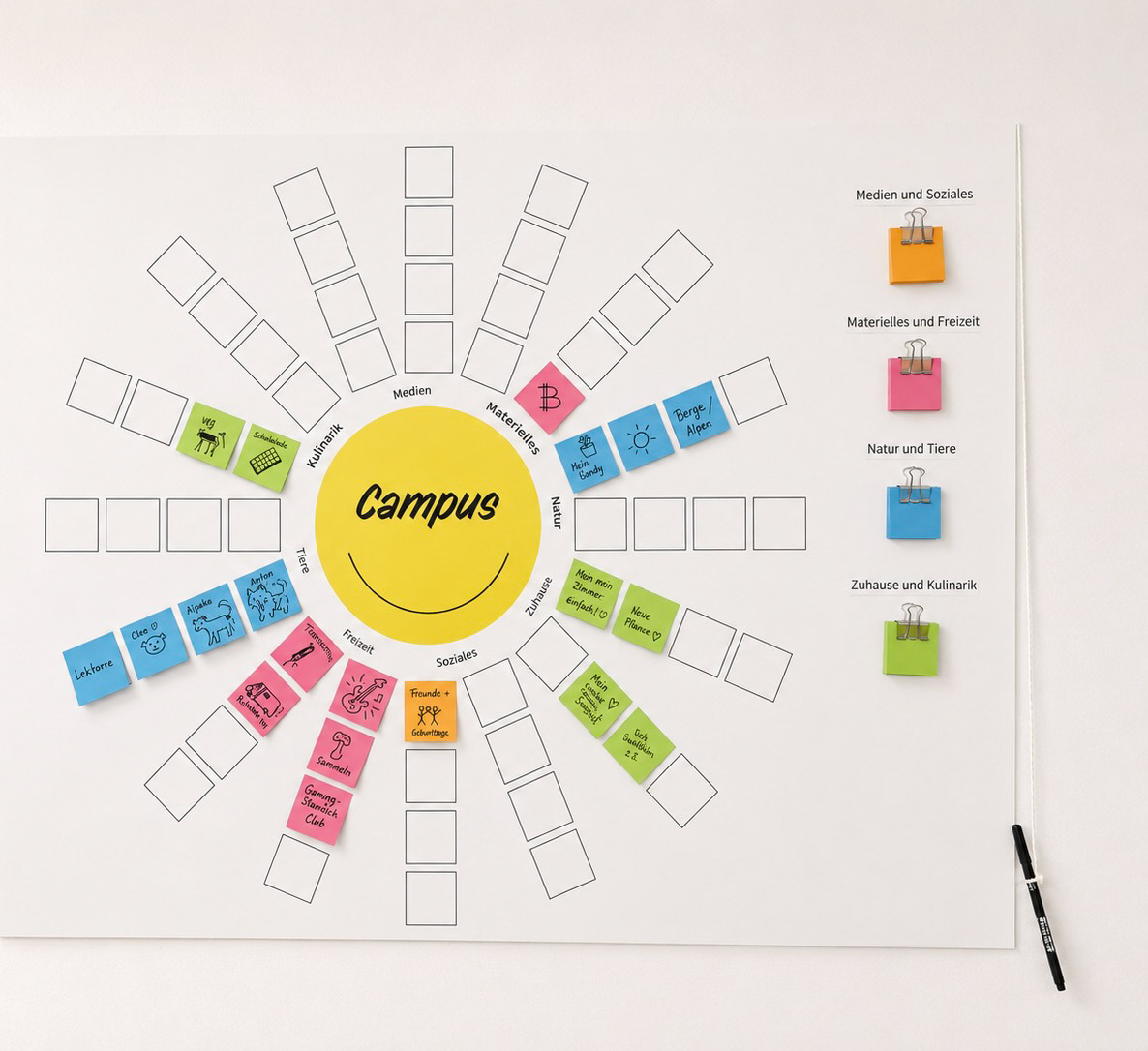
Was bringt dich zum Strahlen? – What makes you shine?
Life satisfaction is measured, indexed and compared — yet the numbers rarely capture how a day actually feels. This work connects subjective emotion with objective data to make everyday wellbeing visible. It argues that happiness cannot be conveyed through statistics alone: it needs a visual language that works emotionally as well as analytically. In translating complex data into images people recognise themselves in, design acts as a social mediator, opening conversations about happiness, routine and the structures we live in.
Data: [official source] · own survey, [cities], 2026
Students: Anna Gampper, Annika Löffler (Mainz) Leonie Lenzen (Düsseldorf), Olaf Wagener (Berlin)
Special thanks
Our deepest thanks go to the students. Building teams across nine cities, coordinating at a distance and still producing work of this quality is anything but a given — it is an extraordinary achievement. Special thanks to Prof. Silke Herwig for the close collaboration throughout, and to the curatorial team of the WDC-Campus, Corinna Gratzl and Julia Klass, together with the Museum Angewandte Kunst Frankfurt, for making the exhibition possible.
Teaching: Prof. Annelie Franke, Prof. Silke Herwig Course: Data Visualization module "Democracy in Numbers", BA Mediendesign Institution: IU Internationale Hochschule Exhibition: WDC-Campus "young talents at work", World Design Capital Frankfurt RheinMain 2026, Museum Angewandte Kunst Frankfurt (3 July – 9 August 2026)
Participants: Mia Betolaza, Charlotte Ermerling, Jennifer Förster, Anna Gampper, Jonas Grabenhorst, Pascal Haibach, Hadjer Hasan Abead, Liliana Heinemann, Jona Heithecker, Hannah, Eva-Maria Klein, Leonie Lenzen, Annika Löffler, Eve Johanna Marschner, Jil Möde, Sarah Obermaier, Thomas Raaß, Lilly Rasche, Sara Reese, Kiliano Ribeiro, Elias Ritter, Marcel Röder, Eveline Rutkowski, Ennie Schiewe, Matti van Well, Lea Völklein, Olaf Wagener, Fabian Mattia Weber, Yannick Wirth, Johanna Greta Witzleben, Thea Woronow
Partner Institutions